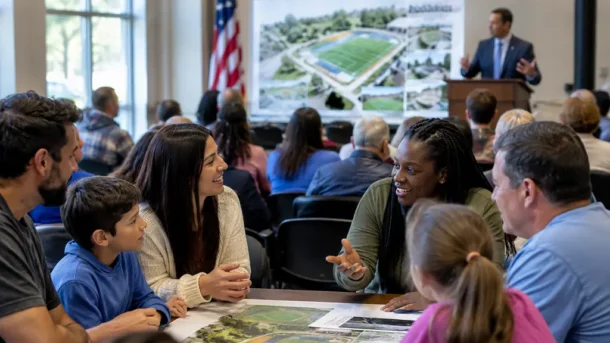
Colton Youth Soccer families received a meaningful local facilities update after the Colton City Council formally approved the name Eloise Gómez Reyes Sports Complex – Juan Caldera Fields on August 18, 2026. The action applies to the athletic portion of a planned 45-acre Habitat Conservation Park near the Santa Ana River, according to the city’s official project milestone. For parents, coaches, and youth players, the approval did not start construction, but it did give the project a clearer public identity and marked a visible step for a city that has reported a long shortage of municipal field space.
The approved name also links the project to local civic memory. The city’s public naming process included resident nominations, Recreation & Parks Commission review, and final City Council selection. The name honors Senator Eloise Gómez Reyes, a lifelong Colton resident credited in city materials with advocacy and funding support, and Juan M. Caldera, a South Colton civic leader and sports pioneer connected to International Stadium in the 1920s. For a youth sports project, that naming choice matters because it frames the complex as more than a set of fields. It connects future practices, matches, and family gatherings to local service and shared community space.
Approval And Naming For Colton Youth Soccer
How The City Reached The Name
The August 18, 2026 decision followed a public process rather than a private naming decision. Residents nominated individuals, the Recreation & Parks Commission reviewed those nominations, and the City Council selected the combined name. That structure is useful for youth sports families because facilities are strongest when they reflect the people who will use them and the people who helped make them possible.
The name Eloise Gómez Reyes Sports Complex – Juan Caldera Fields also gives coaches and league organizers a common reference point as they speak with families, school partners, and city staff. A named facility is easier to discuss in planning meetings, budget updates, and future scheduling conversations. It helps parents understand that the site is not an abstract proposal, even though design and approvals are still in progress.
Why Colton Youth Soccer Field Demand Matters
The need behind the project is direct: city research noted that more than 1,000 local youth have relied heavily on school facilities for soccer and football because of a lack of municipal fields. For Colton Youth Soccer coaches, that kind of field shortage can affect practice consistency, age-group scheduling, and the ability to host community matchdays without stretching school sites beyond their core role.
Municipal fields can give leagues a more stable base. That does not mean every scheduling challenge disappears, especially with multiple sports and age groups sharing space. But local fields designed for community athletics can reduce pressure on schools, shorten some family trips, and give younger players a stronger connection to their own city. For many families, access is not just about having a field; it is about whether a child can train close to home, whether siblings can attend, and whether coaches can plan sessions without repeated changes.
Field Access, Family Planning, And Community Use
What The Planned Sports Area Includes
The full Habitat Conservation Park is planned for 45 acres. Approximately 21 acres are allocated for community sports fields, parking, restrooms, concessions, play and picnic areas, walking paths, and other amenities. The remaining acreage, described in city materials as approximately 24 to 27 acres, is intended for habitat conservation and restoration. That balance is central to the project: active recreation is being planned alongside protection and restoration near the Santa Ana River.
Facility designs are expected to include multiple lighted athletic fields for different age groups, along with restrooms, concession areas, walking trails, parking, play and picnic areas, and customary community amenities. For Colton Youth Soccer families, lights could be especially valuable because evening practices often become necessary after school and work hours. Restrooms, parking, and safe gathering areas also shape the experience for grandparents, siblings, volunteers, and visiting teams.
What Parents And Coaches Can Prepare For
Because construction had not begun as of the latest August 2026 city updates, families should view the approval as a planning milestone rather than an immediate schedule change. Groundbreaking was anticipated in 2027, and the final design and regulatory approval process was expected to take 2 to 4 years across four contract phases. That means local leagues may still need to rely on school fields and existing spaces while the city continues design work and agency coordination.
In the meantime, families and league leaders can use the project timeline to plan better communication. Coaches can explain that the complex is moving through required public steps. Parents can follow city updates, ask about long-term field-use policies, and help their clubs prepare for future volunteer roles. Local businesses can also begin thinking about how concessions, sponsorships, equipment support, and tournament-day services could fit once the site moves closer to opening.
- For parents: ask leagues how practice plans may adjust during the years before construction and opening.
- For coaches: keep tracking field demand by age group so future scheduling requests are backed by clear needs.
- For local businesses: consider how food service, gear support, or event partnerships could serve families during future matchdays.
- For city partners: keep public updates clear so families understand what has been approved and what still needs review.
Funding, Design Work, And Project Timing

The State Funding Piece
The city secured $18 million in State of California funding, awarded through the state budget, for development of the sports complex. A formal agreement with the State was entered into in 2023. City materials describe Senator Reyes as having played a leading role in securing funding and advancing the project, a point that helps explain why her name became part of the approved facility identity.
Public funding for sports infrastructure carries responsibility. Families will want to see how the money supports fields, access, and amenities that serve a wide range of ages and needs. Youth soccer, football, walking paths, picnic spaces, and habitat restoration all sit within the same project plan. That mix makes communication especially important because different community members may focus on different benefits.
Why Design And Reviews Still Take Time
The city has described several site challenges that still require review and coordination, including floodplain conditions, sensitive habitat, a former landfill, and infrastructure constraints. Environmental review, regulatory approvals, and final design are still underway, with coordination needed among county, state, and federal agencies. The city’s milestone page also states that Colton has not built a major new park development in more than 25 years per the city update.
For families, the slow pace can be frustrating, especially when field needs are immediate. Still, careful public planning matters for a site that combines sports use with habitat conservation and restoration. A field project near a river corridor must account for safety, access, drainage, long-term maintenance, and environmental protection. Those factors affect whether the finished facility can serve players well for many years.
Clear communication will help keep community trust strong during this period. If families know which phase the project is in, what approvals remain, and what decisions are open for public input, they can stay engaged without confusing a naming approval with a construction start. Coaches can also help by sharing accurate timelines rather than rumors, especially with younger players who may expect the fields to appear quickly after hearing that the name was approved.
What The Sports Complex Means For Colton Youth Soccer
A Local Sports Identity Built Around Access
The future Eloise Gómez Reyes Sports Complex – Juan Caldera Fields gives Colton a chance to build a stronger local sports identity around access, family presence, and shared public space. For Colton Youth Soccer, the key value is not only the promise of multiple lighted fields. It is the chance to create a place where younger players can see older players train, where coaches can collaborate across age groups, and where families can gather without feeling like they are borrowing space from another institution.
The habitat conservation portion should also shape how the community talks about the project. Young athletes benefit when sports spaces teach stewardship as well as competition. Walking paths, picnic areas, and restoration areas can help the site serve families beyond scheduled practices and matches. That broader use matters for grandparents taking a walk, siblings waiting during practice, and neighbors who may not have a child on a roster but still care about public parks.
For Colton Youth Soccer, the approval on August 18, 2026 was a real step, but the next steps remain practical: final design, regulatory approvals, and the anticipated 2027 groundbreaking. Community support should now focus on patient follow-through, accurate information, and steady advocacy for fields that serve beginners, competitive players, coaches, referees, and families. If those voices stay connected, the finished complex can become a lasting local asset rooted in both sports development and public service.