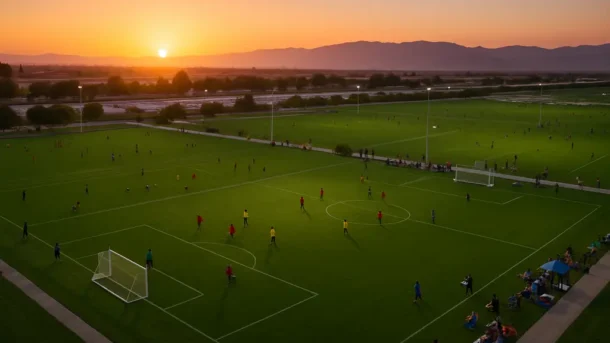
The Salinas Regional Soccer Complex has become one of the most meaningful youth soccer access stories in Monterey County because its impact goes beyond field lines and match schedules. For players, it creates more room to train. For parents, it reduces some of the strain tied to travel, parking, and crowded weekends. For coaches, it gives teams a steadier setting to build habits, compete, and keep young athletes connected to the game.
That matters in a city where soccer is closely tied to family routines and local pride. A strong facility can help young players stay active, meet new teammates, and see a clearer path from recreational play to higher-level competition. The complex is not only a sports site; it is a community gathering place shaped by long-term planning, field investment, and programs designed to keep access closer to home.
Salinas Regional Soccer Complex And Long-Term Access
How Salinas Regional Soccer Complex Supports The Youth Pipeline
The foundation of youth development starts with reliable places to play. The complex spans 68 acres and sits on land covered by a long-term lease structure of 90 years, beginning with 50 years and options for two more 20-year extensions, according to the Blue Zones Project Salinas community report Salinas community report. That kind of stability gives local organizers, families, and partner programs a clearer base for youth soccer planning.
For a youth soccer player, the value is practical. A stable complex means training calendars can be built with more confidence. Coaches can plan seasonal progressions instead of patching together available grass. Families can return to the same location for weekly sessions, league games, and tournaments. Those pieces may sound simple, but they shape whether a child stays in the sport long enough to grow.
What The Four-Phase Plan Includes
The city’s parks planning documents describe a four-phase vision for the site, with a full build-out that includes about 21 tournament-quality outdoor fields, two turf fields, an indoor field, an indoor training and health center, Celebration Plaza, a children’s play area, walking paths, and picnic areas city parks master plan. That planned mix points to a facility model that serves both competition and community use.
- Outdoor fields: A larger field count supports league play, tournaments, and practice blocks across age groups.
- Indoor space: Planned indoor areas would help training continue when weather, daylight, or field wear becomes a concern.
- Family amenities: Play areas, walking paths, picnic zones, and plazas make the site more welcoming for siblings, grandparents, and neighbors.
This is where infrastructure and player development meet. Young athletes need repetition, but families need a place that works for the whole household. A parent with two children in different age groups needs safe spaces between games. A coach needs fields that can handle weekly use. A local club needs room to host visiting teams without pushing regular players aside.
Facility Growth For Player Development
Turf, Lighting, And Field Capacity
Two lighted synthetic turf fields opened in 2025, giving the complex a stronger year-round training base. Lighted fields matter in youth soccer because family schedules often push practices into evening windows, especially for older players balancing schoolwork and other responsibilities. Turf also gives organizers a more durable surface for repeated use, which can reduce lost sessions tied to field conditions.
As of August 2026, eight new fields were under construction, with a hybrid grass blend grown off-site and about 20,000 linear feet of irrigation installed. Those fields are expected to begin opening during winter 2026-27. If that schedule holds, Salinas families could see more practice slots, more tournament capacity, and less pressure on existing fields during busy periods.
There is also a development benefit that can be easy to miss. More fields can help group players by age, ability, and training need. Younger players can get age-appropriate space, while older teams can use larger fields for tactical work. That kind of structure supports coaches who are trying to teach spacing, decision-making, and team shape rather than simply finding any open patch of grass.
Parking, Seating, And Matchday Flow
Access is not only about grass or turf. The complex added a parking lot with 400 parking spaces, and a new entrance and exit from Constitution Boulevard is open. Those improvements matter on tournament days and weeknights alike. A smoother arrival can lower stress for parents getting from work to kickoff, and it can help visiting teams find the venue without adding confusion to already full travel days.
The two turf fields have been tied to a stadium bowl seating area with about 3,000 seats, with team rooms incorporated beneath the seating. For youth athletes, that setting can make high-level local matches feel more organized and meaningful. It also gives coaches and event organizers space to manage teams more effectively before and after matches.
In 2025, weekly use was reported at about 11,500 players, families, and other users, up from roughly 7,000 in 2024. With Phase 3 fields under construction, projected weekly use was expected to move toward 20,000. Those figures show why field expansion, circulation, and seating are not cosmetic upgrades. They are core pieces of how a community sports facility handles growth without losing its family-centered feel.
Programs That Keep Soccer Local

MLS GO And Cost Awareness
For Fall 2026, the complex launched its first in-house youth league through MLS GO for players ages 7 to 14. The schedule runs from September 23 to November 11, 2026, with weekly training and weekly games. Fees were listed at $180 for an individual player or $160 per player on a team, with financial assistance available through the MLS GO Play Fund.
That access point is important for families who want an organized league experience without immediately stepping into heavier travel demands. Local soccer needs entry points where players can learn the sport, build confidence, and decide how far they want to go. A local league also helps coaches identify players who may later benefit from clinics, academy exposure, or more advanced competition.
Families following local participation options can also read about how MLS GO Salinas fits into the wider effort to make youth soccer more reachable for players ages 7 to 14.
Girls’ Access And Local Competition
Through Las R.E.I.N.A.S, fields remain free or low cost for girls and women. In 2024, the complex launched the She Kicks tournament for high-school girls in Monterey County. The tournament helped reduce travel and cost barriers while supporting health, leadership, and equal access.
That kind of local competition is valuable because girls should not need to travel far every time they want a serious soccer environment. Nearby events can let families manage school, work, and transportation while still giving athletes meaningful matches. It also helps local younger players see older girls competing in their own county, which can strengthen the sense that the sport belongs to them.
The Salinas Regional Soccer Complex also hosted the Alianza de Futbol Cup on August 9-10, 2025. The event drew 128 youth teams, more than 2,600 players, and tens of thousands of visitors, including scouts. Salinas was one of eight host sites nationwide and was the smallest city by population selected. For local players, an event of that size brings a higher competition standard into their home area instead of making every major opportunity depend on long-distance travel.
Why Salinas Regional Soccer Complex Matters For Families
What Parents And Local Businesses Can Take From It
For parents, the clearest benefit is access. More fields, evening training options, league programming, and local tournament opportunities can make the soccer calendar easier to manage. That does not remove every cost or travel challenge, but it can keep more of the weekly rhythm inside Salinas. For a family with multiple children, that difference can decide whether soccer remains sustainable.
For local businesses, the sports impact is also real. Tournament weekends bring visiting families who need meals, fuel, and basic services. Regular league nights create steady community traffic. When those visits are tied to youth sports, the business benefit connects back to families rather than one-time events. Local sponsorships, restaurant partnerships, and volunteer support can all help keep programs active while showing young players that their city is behind them.
The partnership announced in January 2026 between Monterey Bay Football Club and the complex added another player development layer. With the site serving as official training grounds for Monterey Bay FC’s USL Academy programs, young athletes in the region gained a closer link to clinics, shared tournaments, and identification opportunities. That kind of connection matters most when it is paired with strong local entry points, because not every child starts as an academy player.
The site also completed more than six years of environmental remediation by June 2026, including soil cleanup, capping, and clean fill import before expansion work opened more land for fields and amenities. For families, that background reinforces how long facility development can take and why public trust matters during each phase. Safe, usable land is the starting point for every training session, tournament, and community event that follows.
The Salinas Regional Soccer Complex is best understood as a youth soccer development hub built through access, patience, and shared local use. Its growth gives Salinas more than extra fields. It gives young players a place to return, compete, improve, and feel connected to their city through the sport they love.