
Grass Fields remain a central part of youth soccer competition because they affect how families, coaches, and local clubs think about play quality, field access, comfort, and long-term development. The research does not support a simple claim that one surface is always safer for every young player. Instead, it points to a more useful local conversation: how well a field is built, maintained, scheduled, and matched to the needs of youth teams.
For California clubs, that conversation is practical. Families drive across cities for league play, tournaments, and scrimmages. Coaches adjust warmups and substitutions based on surface feel, weather, and the pace of the ball. Local parks departments and school districts weigh maintenance costs against demand from multiple sports. A good natural surface can support confidence and technical growth, but only when the community protects it from overuse and plans repairs before problems affect matchday.
Grass Fields And Youth Soccer Development
Youth soccer development depends on repetition, confidence, and a playing environment where young athletes can learn without avoidable distractions. A well-kept natural surface can support first touch, passing weight, turning, and running mechanics in ways players often recognize quickly. Still, the key phrase is “well-kept.” Poor natural surfaces can become uneven, slick, muddy, or worn through the center channel, which can change how the ball moves and how players plant their feet.
Grass Fields And Player Confidence
Grass Fields can help young players feel more comfortable with the ball when the surface is consistent. That matters in youth soccer because a player who trusts the ground is more likely to scan before receiving, use both feet, and make decisions under pressure. Coaches see this during small-sided games, where one bobble or bad bounce can interrupt a passing pattern. Good field conditions do not create development by themselves, but they can remove barriers that make skill work harder for younger players.
For coaches, the value is not only in match performance. Training sessions on dependable natural surfaces can make it easier to run activities that require quick changes of direction, clean passing lanes, and repeated finishing actions. If a field is uneven or soft from heavy use, a coach may need to simplify the session, reduce contact, or move to lower-speed technical work. Those adjustments are sometimes smart and necessary, yet they also show why field planning is part of player development.
Why Surface Quality Matters More Than Labels
Families often ask whether natural grass or artificial turf is safer. The best answer is careful and evidence-based. A 2022 systematic review and meta-analysis found that football injury incidence was about 14% lower on artificial turf than on natural grass across the included data, but for players under 18, there was no statistically significant difference between surfaces in injury rates. That finding should guide local decision-making away from slogans and toward maintenance, scheduling, footwear education, and honest field inspections.
This is where community leadership matters. If a natural field is used from morning to evening without recovery time, its quality can fall quickly. If a turf field has heat, hardness, or infill concerns, families may raise valid comfort questions. Surface labels alone do not protect players. Coaches, referees, parents, and field managers need shared standards for whether a field is match-ready, whether warmup space is safe, and whether a competition should be moved or delayed after heavy wear or weather.
What Research Says About Playing Surfaces
The research picture is mixed, and that is useful for local clubs. It reminds us that field conversations should not be driven by one headline. Injury risk can depend on age, sex, footwear, weather, training load, surface condition, and the type of soccer activity. A tournament match with repeated sprinting is not the same as a midweek technical session. A newly maintained natural field is not the same as a dry, uneven one at the end of a busy weekend.
Player Preference And Comfort
Grass Fields are still strongly preferred by many soccer players. A U.S. consumer survey from mid-2024 reported that among soccer respondents, 57% preferred natural grass, 30% preferred synthetic turf, and 13% had no preference; the leading reasons included fewer injuries, cooling effect in heat, and a softer feel underfoot, according to the 2024 field sports survey. Preference is not the same as medical proof, but it tells clubs what players notice and what families often discuss after long matchdays.
In California, heat comfort can become part of field planning, especially during late-summer tournaments and afternoon kickoff windows. Natural grass may feel different underfoot during warm conditions, while turf can offer more predictable access after rain. Neither answer solves every scheduling challenge. The better community question is how to match the surface to the event, age group, weather pattern, and recovery needs of the players.
How Coaches Can Read The Field
Before training or kickoff, coaches can help by observing the surface the same way they observe an opponent. Is the middle of the field worn down? Are goalmouths uneven? Does the ball slow in patches or skip faster than expected? Are players slipping during warmups? These checks are not formal engineering tests, but they support better decisions about session design and player safety.
A coach might shorten a high-speed transition drill if the ground is loose, or move technical stations away from a damaged goalmouth. Referees also need support from clubs when a surface raises concerns. No family wants a match canceled, but a clear standard protects players and reduces conflict. Field quality is a shared responsibility, not a complaint to be raised only after an injury or a poor result.
Community Planning For Safer Matchdays
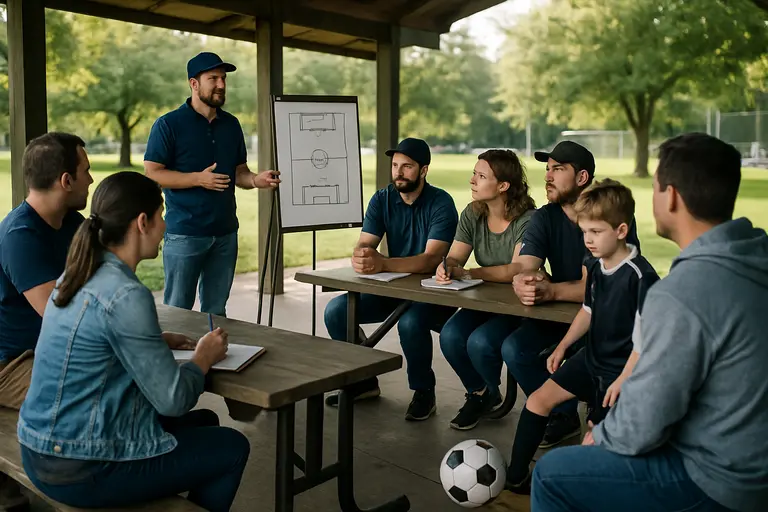
Grass Fields require community planning because natural surfaces need rest, water, repair, mowing, and coordinated scheduling. A club cannot simply ask a field to carry unlimited practices, league games, and tournaments. Local soccer leaders need to work with parks staff, school partners, and families so the surface can recover between heavy use periods.
Good planning also supports equity. If only a few neighborhoods have high-quality natural fields, travel demands can grow for families who already balance school, work, and transportation. Shared field plans can help clubs rotate access fairly, protect high-use areas, and make sure younger age groups are not always pushed to the least reliable surfaces.
Practical Steps For Clubs And Families
Local soccer organizations can build better habits without waiting for a major construction project. Clear communication and small adjustments can protect players and fields during the busiest months.
- Schedule recovery windows: Build rest periods into field calendars, especially after tournaments or heavy rain.
- Match footwear to conditions: Encourage families to ask coaches about safe footwear choices for each surface and weather condition.
- Inspect high-wear zones: Check goalmouths, sidelines, penalty areas, and central channels before sessions.
- Share field expectations: Tell teams where to warm up, where not to train, and how to report surface concerns.
- Plan funding early: Clubs can review youth soccer grants when field repairs or upgrades need shared support.
Parents have a voice in this process. They see parking pressure, crowded sidelines, and worn warmup areas. Local businesses also benefit when tournaments are well organized and facilities are respected. Better fields can bring families to nearby restaurants, shops, and services, but those events should be planned in a way that protects the fields young players rely on week after week.
Why Grass Fields Matter For Local Soccer
Grass Fields are not just a surface choice. They are part of the local soccer experience, from a child’s first weekend match to competitive league play. The strongest approach is not to argue that every match must be on natural grass or that every artificial surface is better. The research supports a more balanced view: injury findings vary by age group and context, while player preference often favors natural grass when quality is high.
For youth clubs, the next step is steady collaboration. Coaches can adapt sessions to the field in front of them. Families can support realistic schedules and report hazards early. Parks departments and school partners can help set use limits that protect long-term access. Local sponsors can support repairs, equipment, and shared maintenance goals. When a community treats field quality as part of player development, young athletes get a better place to learn, compete, and enjoy the sport together.