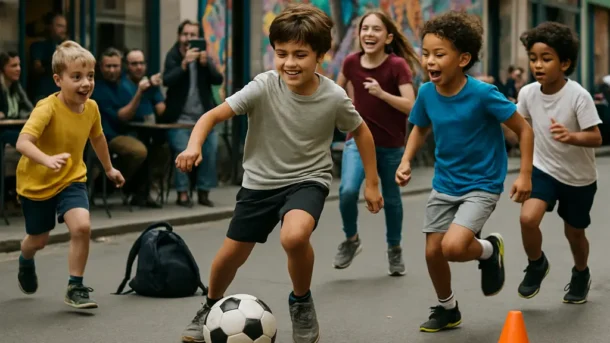
Local Soccer Identity is not built only inside stadiums or during league matches. It grows at neighborhood parks, downtown watch parties, youth clinics, school fields, and public spaces where families meet the sport together. For California youth soccer communities, the lesson from recent 2026 events is clear: when cities, clubs, coaches, parents, and local businesses plan together, soccer becomes part of local life instead of a once-a-week activity.
That matters for young players. A child who sees soccer celebrated downtown may feel that their team belongs to something larger than a schedule. A parent who meets other families at a public event may be more likely to volunteer, carpool, or support a fundraiser. A small business that serves families during a matchday gathering may begin to see youth soccer as a neighbor, not just an outside club asking for sponsorship.
How Local Soccer Identity Starts At Street Level
The strongest community soccer events are often simple: a safe public space, a clear schedule, family-friendly activities, youth participation, and room for local vendors or civic partners. On July 11, 2026, Downtown Torrance hosted its second “Kick-It in Downtown” World Cup watch party from noon to 8 p.m. at El Prado Park, with youth soccer, local vendors, and live screens included in the free community event, according to the City of Torrance announcement.
For youth clubs, that type of city-led event offers a model that can be adapted to smaller settings. A league does not need a major international tournament to create connection. A season-opening family day, a neighborhood skills clinic, or a shared viewing event for a local college or professional match can give players a stronger sense of place. The key is making the event feel connected to the town, not separate from it.
Local Soccer Identity Needs Youth At The Center
Youth programming should be more than a side activity. The 2026 Soccer Forward Fests initiative, held between May and August 2026, was described in the research notes as reaching nearly 600 community events across all 50 states and Washington, D.C., with about 85,000 participants. The notes also reported that 79% of events were youth-focused. Those details show why player-centered planning matters: the clearest path from a public celebration to long-term soccer growth runs through children who get to kick a ball, meet coaches, and see families cheering them on.
For local clubs, this means every public event should answer a player development question. Will first-time players have a welcoming activity? Will current players have a chance to mentor younger children? Will girls, newcomers, and children with different ability levels feel included? These questions protect Local Soccer Identity from becoming only a spectator idea and keep it rooted in participation.
What Recent 2026 Events Taught Local Clubs
Recent events across the United States showed that soccer gatherings can support downtown traffic, cultural pride, public space use, and youth engagement. Denver’s Skyline Park hosted a World Cup viewing experience from June 11 to 19, 2026, and the research notes said that the Rapids’ watch events and related gatherings drew about 40,000 visitors during the first days of the tournament. Philadelphia used a 39-day event stretch around six official matches and a Fan Fest, with the research notes describing packed hotels and a festival atmosphere.
Those examples are larger than what most youth clubs can run, but the planning lessons scale down well. Matchday operations matter. Families need to know where to park, where children can play safely, and which activities are free. Local businesses need enough notice to staff properly. Coaches need a schedule that does not clash with training, tournaments, or recovery. Cities need a clear plan for trash, restrooms, transit, and shared public space.
Small Details Shape Family Trust
Parents remember whether an event felt safe, organized, and welcoming. A poorly marked entrance or unclear youth activity schedule can leave families frustrated. A clear check-in table, visible volunteers, shaded rest areas, and age-appropriate soccer stations can make the same event feel supportive. These details are not glamorous, but they shape whether a family returns.
California clubs can connect event planning with broader community soccer initiatives, especially when they want to serve families beyond their current rosters. For example, clubs that study community soccer initiatives can better connect clinics, volunteer projects, and local outreach with the needs of neighborhoods near their fields.
Community Standards That Keep Events Welcoming
Strong soccer identity should include everyone who wants to participate. The Boston26 Community Celebrations Playbook v2, published in April 2026, outlined standards for inclusion, non-discrimination, and equitable participation across race, gender, age, disability, and other areas for FIFA World Cup-related events in Boston’s planning framework, as shown in the Boston celebrations playbook.
That guidance is useful beyond Boston. Youth soccer leaders in California can treat inclusion standards as part of basic event planning. Accessibility, language access, respectful behavior policies, and clear volunteer expectations help families feel safe before the first whistle. This is especially meaningful in communities where soccer connects families from different cultural backgrounds, school districts, and income levels.
Governance Starts Before The Event Opens
Good governance is not just a board meeting topic. It shows up in who gets invited to help plan, which teams receive field time, how costs are shared, and whether families can raise concerns. If an event is meant to represent a community, then coaches, parents, local business owners, school partners, and youth players should have a voice early enough to shape the plan.
One practical approach is to create a small event working group with clear roles. A club director can manage soccer activities. A parent lead can coordinate volunteers. A city or school contact can handle site rules. A business liaison can connect local restaurants, shops, or service providers with the event schedule. That structure keeps one person from carrying the full load and helps the event reflect the full community.
Turning Event Energy Into Youth Soccer Development

A community event has the most value when it leads to continued participation. Families may enjoy a watch party, but clubs should also offer simple next steps: beginner clinic dates, recreational league registration windows, scholarship contacts, equipment donation options, and volunteer opportunities. The goal is not to pressure families. It is to make the pathway visible.
Here are practical steps local clubs can use after a public soccer event:
- Send a clear follow-up: Share clinic dates, age groups, and contact details within a few days.
- Invite first-time players back: Offer a low-cost or free introductory session before asking for a full commitment.
- Thank civic and business partners: Public appreciation helps build trust for the next event.
- Ask families what worked: A short survey can reveal transportation, language, cost, or scheduling barriers.
- Connect older players with service: Teen players can help run stations, welcome younger children, and model positive team culture.
The Monterey Bay FC and City of Seaside Hispanic Heritage Night was scheduled for September 5, 2026, at Cardinale Stadium against Phoenix Rising FC, according to the research notes. Because the notes available here came from before the match, they support the planned cultural focus but do not provide event outcomes. Still, the example points to a larger lesson: cultural identity and soccer identity often grow together when communities are invited to see themselves in the matchday experience.
Local Soccer Identity Beyond A Single Event
Local Soccer Identity grows when a public event becomes part of a longer relationship. A watch party can introduce families to the sport. A clinic can help a child start playing. A downtown gathering can show local businesses that youth soccer brings families together. A city playbook can remind organizers that access and respect are part of the work.
For California clubs, the next step is to treat every community event as both a celebration and a player development doorway. That means planning with city partners, supporting families with clear information, and keeping youth players visible at the center of the experience. When teams, coaches, parents, and civic leaders share that responsibility, soccer becomes more than a match schedule. It becomes a community habit that young players can carry with pride.