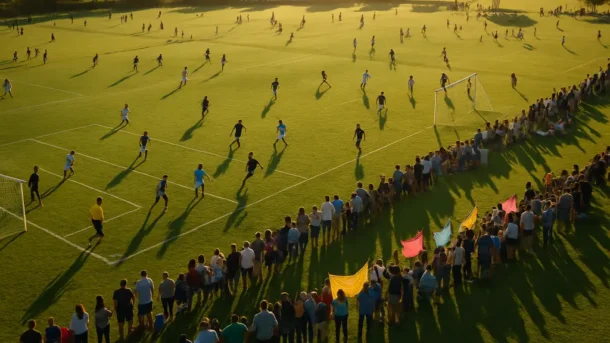
The Salinas Regional Soccer Complex has become a clear local example of how youth soccer facilities can grow when families, civic leaders, businesses, and public partners keep the focus on access. As of October 15, 2026, the project is best understood not as a single construction milestone, but as a community effort shaped by long planning, donated support, federal funding, and steady demand from players who need reliable fields.
For parents, coaches, and league volunteers, the most useful lesson is practical: field growth only works when it is tied to shared responsibility. A new pitch is not just grass, goals, and painted lines. It affects practice schedules, tournament hosting, referee assignments, parking, maintenance, and the confidence families feel when they commit time and money to youth soccer. Salinas has shown that facility planning can be a community discussion, not just a facilities discussion.
Why Salinas Regional Soccer Complex Growth Matters
Field Capacity And Youth Development
Construction began in August 2026 on eight new natural grass fields after more than six years of environmental remediation at the site, according to the complex’s official complex update. That timeline matters because many youth soccer families know how hard it is to build dependable field capacity in California. Land use, soil preparation, fundraising, local approval, and long-term maintenance all shape whether a project can move from an idea to usable space for teams.
At the Salinas Regional Soccer Complex, eight additional natural grass fields give local soccer leaders a chance to address a common strain on youth programs: too many teams sharing too few dependable spaces. When field inventory is limited, younger age groups may receive late practice windows, coaches may have less time to teach fundamentals, and families may travel farther than necessary. More fields do not solve every challenge, but they can create better conditions for age-appropriate training, fairer scheduling, and more consistent league operations.
Why Natural Grass Still Matters
Natural grass fields require careful care, rest periods, water planning, and grounds management. Even with those responsibilities, they remain valuable for youth development because they support the daily rhythm of practices, small-sided games, and weekend matches. A grass-field expansion also asks the community to think beyond the ribbon-cutting moment. Who maintains the surfaces? How are fields rotated? How are tournaments balanced with local league needs? Those questions are part of responsible governance.
The eight-field phase is part of “The Match,” a $3 million effort to build the fields and supporting infrastructure, backed by a $1.5 million challenge gift from Taylor Farms, as described in the same construction announcement. For local teams, that structure sends a helpful message: major gifts can encourage wider participation when they are connected to a clear public benefit.
How Public Support Met Community Giving
A Funding Mix Families Can Understand
Strong youth soccer facilities rarely come from one funding source. They tend to grow through a mix of public support, private giving, family participation, and steady local advocacy. In March 2026, Congresswoman Zoe Lofgren delivered a $500,000 federal appropriation toward the expansion, the Salinas Valley Tribune reported. That federal contribution sits alongside local giving and the larger campaign work behind the eight-field project.
This blend is important for youth soccer because it spreads responsibility. Public investment can help recognize the regional value of a sports site. Private gifts can speed up specific phases. Smaller donors and families help keep the project connected to the people who use it. When all three are visible, families can see that youth fields are civic assets, not extras.
Local Business Value Without Losing The Youth Focus
Sports facilities also affect nearby businesses. A larger complex can bring families to food spots, gas stations, shops, and lodging during league weekends or tournament days. Still, the youth-first mission should stay at the center. Local business support works best when it helps keep participation accessible, improves the matchday experience, or reduces pressure on families through sponsorships, volunteer support, or donated services.
That is why the Salinas example deserves attention from other California soccer communities. The funding story is not only about raising money. It is about aligning money with field use, player development, and long-term maintenance. For readers comparing similar local projects, our related look at Salinas soccer access connects this expansion to the wider need for more dependable youth facilities.
Governance Lessons For Youth Soccer Families
Salinas Regional Soccer Complex Governance Signals
The research record describes the complex as developed and operated by the Salinas Regional Sports Authority, a nonprofit created through a public-private partnership with the City of Salinas and Monterey County. It also notes a long land arrangement for the site. For families, the key lesson is not the legal structure alone. The lesson is that youth sports facilities need stable stewardship, clear public purpose, and enough time to plan beyond one season.
The Salinas Regional Soccer Complex also shows why governance should include community listening. Research notes from 2025 described public surveys seeking input on amenities such as sand courts, skate parks, and a wellness center. That kind of outreach matters because soccer families are not all asking for the same thing. Some want more practice space. Others need safe walking routes, shaded areas, restrooms, lighting, or better parking flow. Coaches may prioritize field layout and warm-up areas. Referees may need safer movement between games.
What Coaches And Parents Can Ask
When a local facility expands, families can support the process by asking clear, constructive questions. These questions keep the focus on access and player care rather than short-term excitement.
- Scheduling: How will new fields affect practice windows for younger and older age groups?
- Maintenance: How will natural grass fields be rested, repaired, and protected during heavy use?
- Access: How will parking, drop-off areas, and family movement be managed on busy matchdays?
- Affordability: How will expanded facilities support families who already face high costs for youth sports?
- Community Use: How will tournaments, local leagues, clinics, and open community needs be balanced?
These are not negative questions. They are signs of a healthy soccer community. Coaches want reliable training space. Parents want safety and fairness. Players want a place where they can learn, compete, and feel proud of their team. A strong governance model makes room for all of those needs.
What Salinas Regional Soccer Complex Teaches Local Soccer
A Model Built On Patience And Shared Ownership
The most valuable lesson from the Salinas Regional Soccer Complex is that facility growth takes patience. The August 2026 construction start followed years of environmental work, and the current expansion is tied to a named campaign, major donor support, and public funding. That sequence shows local soccer leaders that durable progress often comes from steady steps rather than quick fixes.
For California communities, this model is especially relevant. Youth soccer demand is high, land is limited, and families often manage long travel days for league play. A well-planned regional facility can reduce some of that strain by giving clubs, schools, and community programs a stronger base for practices, matches, clinics, and tournaments. It can also help local players feel that their sport has a real home in the community.
Camila Torres’ view is simple: facilities grow best when the people closest to the game are invited into the work. Parents, coaches, donors, public officials, local businesses, and players each see a different piece of the need. Salinas offers a useful path because its expansion connects fields, funding, governance, and community voice. If other cities study that mix carefully, they can build soccer spaces that serve young athletes for many seasons, not just one project cycle.