

Salinas soccer growth has become one of Central California’s clearest local examples of what happens when field space, organized leagues, coaching, and family support move in the same direction. As of early 2026, the Salinas Regional Soccer Complex reported more than 16,000 weekly users, up from about 11,500 weekly users in 2025, according to the complex’s published update on the team guiding the complex. For families, that growth is not just a facility number. It reflects more practice windows, more local matches, and more chances for young players to stay connected to the sport close to home.
The case of Salinas matters because youth soccer participation often rises or falls on practical access. A player can love the game, but if field time is scarce, travel is too costly, or programs do not match a family’s schedule, participation becomes harder to sustain. The Salinas complex shows how a community-centered venue can support recreational players, club teams, clinics, tournaments, and newer entry points in one shared sports setting.
How Salinas Soccer Growth Expanded Access
What Salinas Soccer Growth Looks Like On The Field
The strongest sign of Salinas soccer growth is the steady increase in weekly use. Moving from about 11,500 weekly users in 2025 to more than 16,000 in early 2026 suggests that demand was not limited to one event or one league. It points to repeated use across practices, matches, clinics, and community programming. For local coaches, that level of activity can create a deeper player pool. More children touching the ball each week means more chances to identify different learning styles, late bloomers, and players who may not have entered the sport through a travel-first pathway.
As of September 2026, eight new fields were under construction at the complex, based on the same Salinas Regional Soccer Complex update. That detail is significant for families who have dealt with crowded schedules, late practice times, or long drives to neighboring cities. More fields can help leagues spread out age groups, reduce conflicts between training and match play, and make room for events that bring teams into Salinas from across the region.
Why Field Capacity Matters For Families
Field capacity is often discussed as an operations issue, but it is also a family issue. When a league has enough space, younger players can train at age-appropriate hours. Coaches can hold sessions without rushing warmups or sharing too much space. Parents can plan around clearer schedules. Local businesses near the complex can also benefit when families buy meals, fuel, gear, or small necessities around match days and tournament weekends.
This is why facility growth should be measured by more than acreage or field count. The real community value comes from how the space is used. A well-used complex can serve beginners, advanced club players, volunteers, referees, and families across different income levels. For readers following local infrastructure, our related coverage of Salinas Regional Soccer Complex growth looks at how field development can widen access when public support and local donors stay involved.
Clinics, Leagues, And Player Development
Free Training Connected More Monterey County Players
The complex has also supported youth development through community clinics. On July 12–13, 2025, more than 400 youth athletes ages 9 to 15 from Monterey County participated in the Chevron Soccer Academy, a free clinic at the Salinas complex, as reported by the Salinas Valley Tribune. For many families, free programming can remove one of the biggest barriers to extra training: cost.
Clinics like that can help players hear new coaching voices without leaving their local sports environment. They can also give younger athletes a positive first experience with structured drills, small-sided play, and skill stations. The long-term value is not only whether a player becomes elite. It is whether that player feels welcomed enough to keep showing up, joining teams, and building confidence.
League Pathways Give Coaches A Better Starting Point
Another development point came in fall 2026, when the complex launched its first in-house youth soccer league through MLS GO for ages 7 to 14. The program was scheduled to run from September 23 to November 11, 2026, with one training session and one game each week. Since today is October 18, 2026, that program was still within its scheduled window.
For local leagues, this type of format can be especially useful. One training session plus one game each week gives young players repetition without overwhelming families. It also gives coaches a clear rhythm: introduce a skill, practice it in a supportive setting, and let players apply it in a match. That rhythm can help children understand spacing, teamwork, and decision-making before they face more competitive demands.
The growth of club programs around Salinas adds another layer. The research notes that El Camino Futbol Club, founded in Salinas in 2017, grew from 11 teams to more than 30 teams across U-7 through U-18, with more than 500 active youth players. That kind of club expansion suggests that participation is not limited to one age band. It stretches from early elementary players to older teens who are preparing for high school competition, college interest, or continued community play.
Community Support Around The Complex
Parents, Coaches, And Local Businesses Share The Load
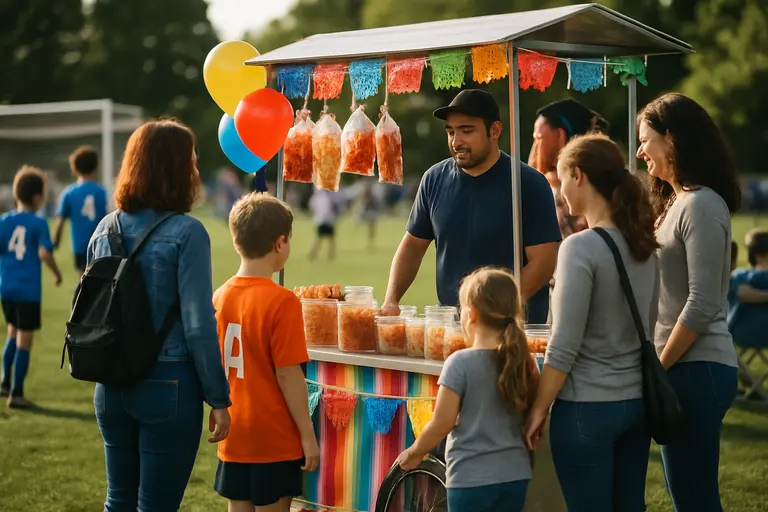
No complex grows on fields alone. Parents coordinate rides, wash uniforms, volunteer at check-in tables, and encourage players after hard matches. Coaches help shape the experience by setting expectations for effort, respect, and learning. Local businesses support families before and after games, especially during larger events when visitors spend time in the city.
This shared support system is a major reason Salinas soccer growth has meaning beyond participation totals. A child who joins a league may bring siblings, grandparents, classmates, and neighbors into the sports community. A tournament can introduce visiting families to local restaurants and shops. A clinic can connect a new player with a coach who sees potential. These small links add up over time.
Regional Events Build Local Sports Identity
The 2025 event calendar showed how the complex could serve both local players and regional visitors. The research notes that the Alianza de Futbol event drew 128 teams and more than 2,600 players to Salinas in 2025. The same year, the NorCal Playdate brought more than 50 teams and 800 youth players from across Northern California to the complex.
Events of that size can strengthen local sports identity when they are managed with care. Families see Salinas as a serious soccer host. Young players get to compete against teams they may not meet in a regular local schedule. Coaches can compare player development across regions. For city partners and nearby businesses, tournaments can bring steady weekend activity tied to youth sports rather than one-time entertainment.
- For parents: More local field space can mean fewer long drives and better options for siblings in different age groups.
- For coaches: Larger player pools can support better grouping by age, skill level, and development needs.
- For local businesses: Tournament weekends can bring visiting families who need meals, supplies, and services.
- For young athletes: More clinics and leagues can offer entry points before players choose a club or competitive track.
What Salinas Soccer Growth Means For Local Leagues
Practical Steps For The Next Schedule Cycle
For league leaders, Salinas soccer growth raises practical questions. How should field time be shared between recreational teams, club programs, clinics, and regional events? How can younger players receive early evening slots while older players still get enough training time? How can referees, coaches, and volunteers be supported as participation rises?
The answer starts with clear communication. Families need schedules early. Coaches need field assignments that match roster size and age group needs. Tournament organizers need parking, check-in, and field maps that reduce stress. Local businesses need advance notice when large youth soccer events are expected, so they can plan staffing and inventory around visiting families.
The Salinas case also shows why local leagues should treat facility planning as player development. Better access can increase touches on the ball, improve attendance, and keep more children connected through middle school and high school ages. Safe, active, and organized fields give coaches the setting they need to teach, and they give families a reason to keep choosing local soccer.
Salinas soccer growth is not just about a larger complex. It is about a community building enough space, programming, and support for more children to play. If the new fields, clinics, in-house leagues, and regional events continue to serve families with care, Salinas can remain a strong Central California model for youth soccer participation and local league development.


