
Recreational Soccer Leagues are getting more attention because families want youth soccer that is affordable, close to home, and rooted in friendship as much as competition. The research shared for this topic points to a clear pattern: soccer participation has grown, public agencies and nonprofits have invested in places to play, and families still need help with fees, travel, coaching, and field access. For California clubs and neighborhood programs, that means community support is not a side project. It is the base that lets more children stay in the game.
Why Recreational Soccer Leagues Are Gaining Support
Outdoor soccer was identified in the 2026 SFIA U.S. Trends in Team Sports Report, released on September 24, 2026, as the fastest-growing team sport in 2025. The same research noted that 92.3 million Americans age 6 or older played a team sport in 2025, up 7.6% from the prior year. Those numbers matter for local soccer leaders because growth can bring both opportunity and pressure. More players can mean fuller fields, more volunteer needs, and more families asking for entry points that do not require a high-cost club path.
Why Recreational Soccer Leagues Fit Families
The Aspen Institute’s State of Soccer NYC/NJ report, released on April 21, 2026, offered a helpful reminder about why children play. In a survey of about 700 youth players, 48% said playing with friends was their top reason for playing soccer. Having fun followed at 46%, and skills improvement was close behind at 45%. Winning and scholarships were much lower, at 23% and 13%. That finding should shape how parents, coaches, and league boards talk about development.
For a young player, a good first league experience is often built around belonging. A child who knows teammates from school, sees familiar families on the sideline, and feels safe trying new skills is more likely to return. That is why Recreational Soccer Leagues can meet a need that competitive programs may not always fill. They give players a place to learn the game without making every weekend feel like a tryout.
Growth Is Real, But Access Must Stay Central
The same Aspen Institute research found that cost remained a barrier. Across all surveyed players, 32% cited expensive team fees as a major issue. Among children from low-income households, that figure rose to 41%. Separate research cited in the topic notes showed that U.S. family spending on one child’s primary sport increased from 2019 to 2024, and soccer-specific spending also rose during that period.
Those cost pressures show up in practical ways: registration fees, uniforms, tournament travel, fuel, food, sibling care, and time away from work. In California, where travel between communities can be long even within the same county, a lower-cost local league can protect both player access and family schedules.
How Fields And Mini-Pitches Shape Local Access
Community support is not only about coaching or registration scholarships. It is also about physical space. If families cannot reach a safe field after school or on weekends, interest does not always turn into participation. The research notes showed strong attention to small-sided fields and mini-pitches, especially in underserved areas.
Smaller Spaces Can Reduce Travel Strain
Mini-pitches are small hard-court soccer surfaces built for compact play. According to North Carolina State University reporting on mini-pitch research, about 70% of more than 800 mini-pitches built at that point were in areas with low childhood opportunity and high population density, and 6.5 million children lived within a half-mile of a mini-pitch mini-pitch research. That matters for families who may not have reliable transportation or time for cross-town training.
Small-sided spaces also fit how many children first enjoy soccer. A compact field can support quick games, skill stations, after-school sessions, and short practices. Coaches can give more touches on the ball. Parents can see play happen closer to home. Local parks departments can sometimes schedule these spaces more flexibly than full-size fields. Research notes also showed that mini-pitches often became community hubs and brought new users into soccer, which is especially valuable for first-time players.
Public Funding Shows What Partnerships Can Do
Public investment can help local soccer move from good intentions to real access. On June 3, 2026, New York launched the NY Kicks initiative, a $6 million program with $5 million for capital grants and $1 million for operating costs to build or improve community soccer fields, especially in distressed communities; grants were set at $75,000 to $200,000 and could cover up to 50% of project costs NY Kicks initiative. While that program was specific to New York, the structure offers a useful model for California conversations among cities, school districts, clubs, and nonprofit partners.
The research notes also referenced U.S. Soccer’s April 1, 2026 introduction of the Places to Play initiative through the Soccer Forward Foundation, with early small-sided FIFA-approved pitches in Birmingham, Alabama, and Oakland, California. The Oakland reference is especially relevant locally because it points to California as part of the national discussion around accessible soccer spaces. The available research does not list every California city using similar models, so local leaders should treat these examples as planning signals, not proof that every community has the same resources.
What Families And Coaches Can Build Together
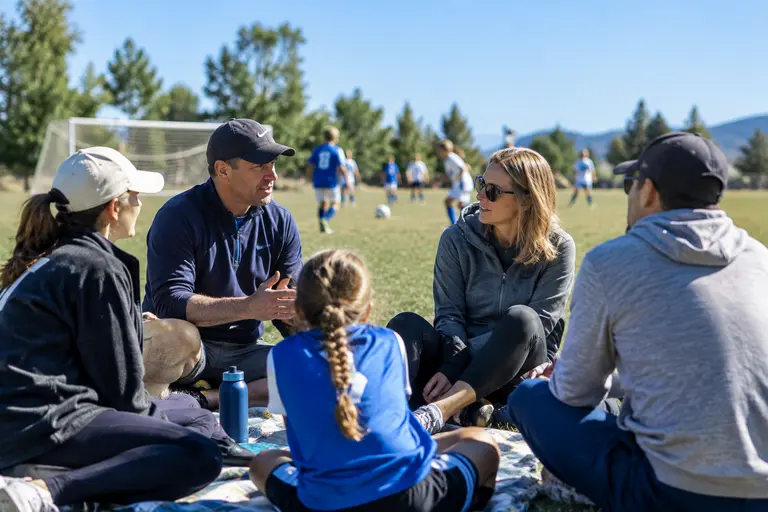
Strong leagues rarely happen through one person’s effort. They need parent volunteers, coach education, field scheduling, clear communication, and a budget that families can understand. For clubs working on community support, the goal should be simple: make the first season easier to join, easier to afford, and easier to finish.
Clear Roles Keep Costs Visible
Families are more willing to support a league when they know where money goes. A simple budget can explain registration costs, referee fees, field permits, equipment, insurance, coaching support, and scholarship needs. It also helps prevent confusion between recreational goals and travel-team expectations. Recreational Soccer Leagues should be clear about what is included and what is optional, especially for families comparing multiple youth sports.
Coaches can help by setting a development tone early. Practices can focus on ball control, movement, small-group teamwork, and confidence. Parents can help by organizing snacks, ride shares, field setup, and welcome tables for new families. Local businesses can support with modest sponsorships, equipment drives, or discount nights that connect teams with neighborhood restaurants and shops. For more on how parks, schools, and families support local soccer, our related coverage on community support in California youth soccer connects these ideas to the California youth soccer setting.
Local Businesses Can Support More Than Jerseys
Business support is often discussed through jersey sponsorships, but the need is wider. A local print shop can reduce sign or flyer costs. A grocery store can support snack stations. A physical therapy clinic can offer parent education on warmups, while staying within safe general guidance. A restaurant can host a team meal that makes families feel connected. None of these actions has to be large to be useful.
The strongest partnerships respect the children first. Sponsors should understand that recreational play is about access, confidence, and community connection. A business that helps cover fees for five players may have a deeper local impact than one that only buys a banner. For California neighborhoods, especially those where family budgets are tight, small support can keep a child on the field for another season.
What Recreational Soccer Leagues Need From Us
The next step for community leaders is to treat soccer access as shared work. Cities can review field availability. School districts can consider safe after-school field use. Clubs can create entry-level coaching support. Parents can volunteer in small roles that do not take over their week. Local businesses can fund equipment, scholarships, or field days. Each action helps reduce the pressure on one group carrying the full load.
Practical Next Steps For California Communities
For California families and youth soccer boards, a practical plan can start with a local access check:
- Map nearby play spaces: Identify parks, school fields, futsal courts, and safe hard-court areas that could support short practices or small-sided games.
- Review cost barriers: Look at registration fees, uniforms, travel, and optional expenses before families are asked to commit.
- Build a volunteer ladder: Offer small roles such as field setup, snack coordination, welcome table support, and equipment sorting.
- Protect the player experience: Keep friendship, fun, and skill growth at the center, since youth research shows those reasons matter most to children.
- Invite local partners early: Bring parks staff, schools, nonprofits, and businesses into planning before the schedule is full.
Recreational Soccer Leagues can become one of the most practical ways to grow the game because they meet families where they are. They do not need to copy high-cost travel structures to be meaningful. They need safe spaces, fair fees, welcoming coaches, and a community that sees every new player as part of the local soccer family.